Our Grain Philosophy
Great bread starts long before the oven. It starts in the soil.
Why GRAIN Matters To Us
Every loaf we bake begins with a simple question: is this the best grain we can find?
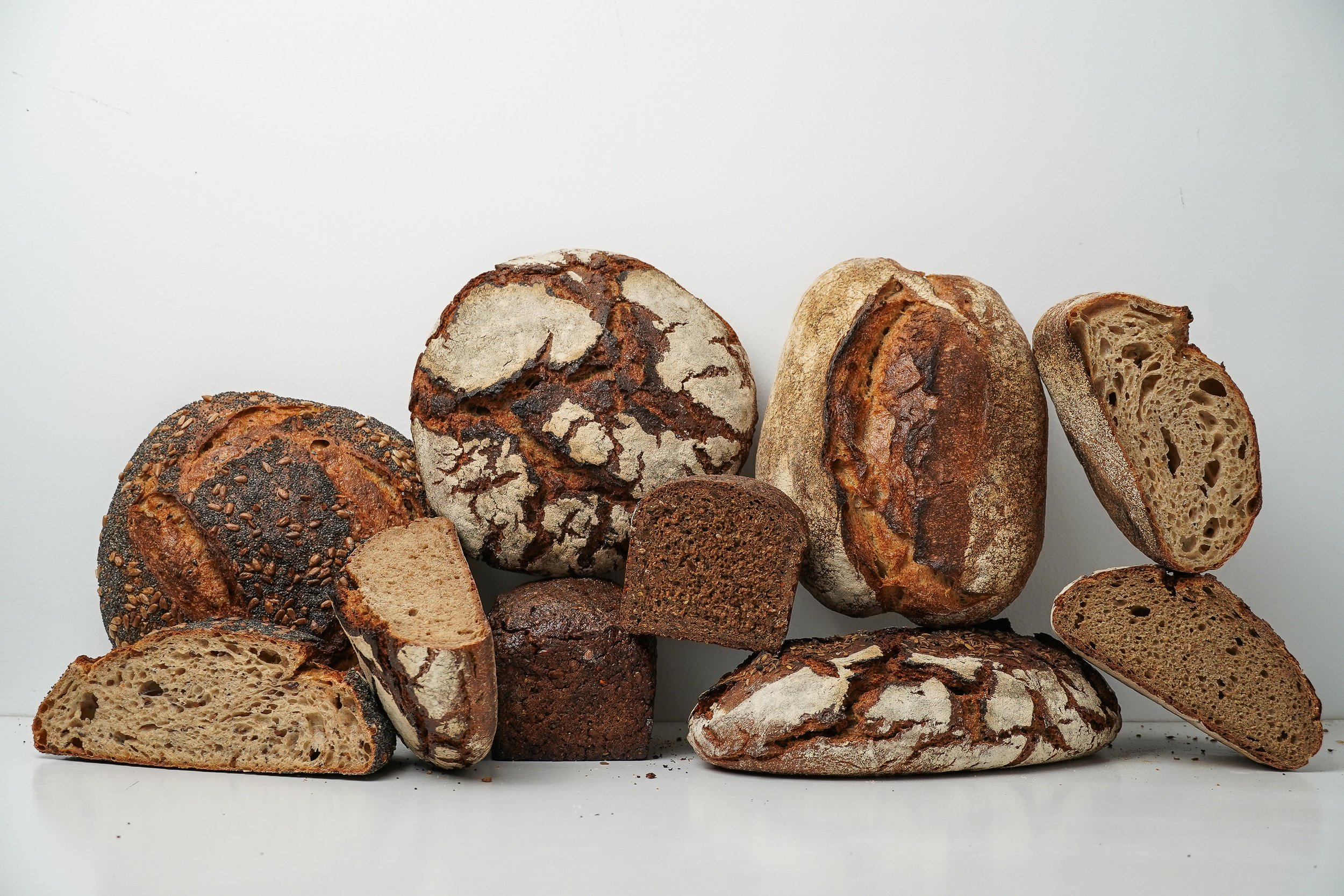
Flour is not just an ingredient in our bread, it is our bread. The variety of wheat, the soil it grew in, the season it weathered and the way it was milled all shape the flavour, the crumb and the crust of what comes out of our oven. So we take grain seriously, and we always have.
For many years we baked with certified organic flour, and it served us well. In recent years, though, certified organic grain has become harder to find in Australia as fewer farmers are growing it, harvests have been less consistent, and our miller has now discontinued their organic flour altogether. So we went looking for the best grain we could still find here, and found certified sustainable flour. The farmers we work with grow their wheat using regenerative practices that rebuild soil health, and every batch of their grain is independently tested and fully traceable from paddock to mill.
For us, sustainability has always meant more than farming methods alone. It includes the people: fair prices for growers, fair work throughout the supply chain, and a local grain economy that will still be here for the next generation of bakers.
GOOD FOR YOU
·
GOOD FOR OUR BREAD
·
GOOD FOR THE PLANET
·
GOOD FOR YOU · GOOD FOR OUR BREAD · GOOD FOR THE PLANET ·
Our Four Rules
-
![Quality tick]()
Quality
Does it make exceptional bread, every single time? This is where every decision starts and ends.
-
![Grain]()
Nutrition
Does it nourish? We favour whole and ancient grains, long fermentation, ingredients we'd feed our families.
-
![Infinite symbol]()
Sustainability
Is it grown here in Australia? Do the crops help the soil, the climate and the people who grow them?
-
![magnifying glass]()
Transparency
Can we trace it and explain it plainly? Do we know all the ingredients on the label and do they look too many?



No certificate can tell you how flour bakes. THAT’S ON US.
So rather than choosing ingredients on a label alone, we evaluate everything through the same lens: quality, nutrition, sustainability, and transparency. Right now, the grain that best answers all four comes from certified sustainable Australian farms.
Sustainable or Organic?
You’ll be surprised to learn that no certification automatically guarantees great flour!
-
Organic certification is rigorous and has done enormous good for agriculture worldwide. Its limits in Australia are practical ones: certified organic grain is in short supply, seasons vary, and the flour that performs beautifully one harvest may not the next.
-
Certified sustainable is not perfect either. It's a newer standard that fewer people recognise, and unlike organic it permits the careful, restricted use of some synthetic inputs. A trade-off made in exchange for practices like reduced tillage that protect soil and lower emissions. Some people will weigh that trade-off differently, and we respect that.
It’s Important To Know…
Choosing certified sustainable flour over organic changes two things. Here are the questions we're asked most, with plain answers.
-
Glyphosate is the most widely used weed killer in the world, and many people are understandably concerned about chemicals in farming and traces of them ending up in food.
This is the biggest difference between the two standards. Organic farming bans glyphosate completely. The Certified Sustainable Grain Standard allows it but only in a strictly limited way. So it's fair to ask what that means for your bread.
Here's how the sustainable standard deals with that. Farmers can only use glyphosate very early in the season, while the wheat plant is still young, months before the grain itself develops. Under the sustainable code, it is banned outright to spray the crop shortly before harvest to dry it out. Unfortunately, this is a shortcut used in some conventional farming.
Also rigorously after harvest, every batch of sustainable grain is tested by an independent laboratory for more than 270 different chemical residues, including glyphosate. If the lab detects any residue at all, the grain isn't certified, and it never reaches our bakery.
The bottom line: the flour in our bread is independently tested and verified to contain no detectable chemical residues. That's the same result our organic flour gave us, but now it's confirmed batch by batch.
-
As we transition from certified organic wheat flour to sustainably grown Australian wheat flour, some of our wheat-based breads are now made with flour that contains added folic acid (vitamin B9) and thiamine (vitamin B1). These vitamins are added by the flour mill as part of Australian food regulations for bread-making wheat flour. We do not add them ourselves.
These requirements apply only to some wheat flour. Ancient grains such as rye, spelt, emmer and khorasan are exempt, so our breads made exclusively with these grains contain no added folic acid or thiamine.
You should also know that folic acid has been added to Australian bread-making flour since 2009 to help reduce the risk of serious neural tube defects in unborn babies. While Thiamine has been added since 1991 to help prevent vitamin B1 deficiency.
As always, we believe in complete transparency about the ingredients we use, so you can make informed choices about the food you eat.
Our Commitment
Our promise to you hasn't changed: the best bread we know how to bake, from the best grain we can find, chosen with care and explained without spin.
Standards evolve, harvests vary and Australian farming keeps getting better. We'll keep evaluating everything through the same four lenses and if we find a better local grain, we will utilise it, and you'll hear it from us first.
Love,
The Butterken team xo